
Best PR Strategies for Small Businesses in 2024 (That Actually Get You Covered)
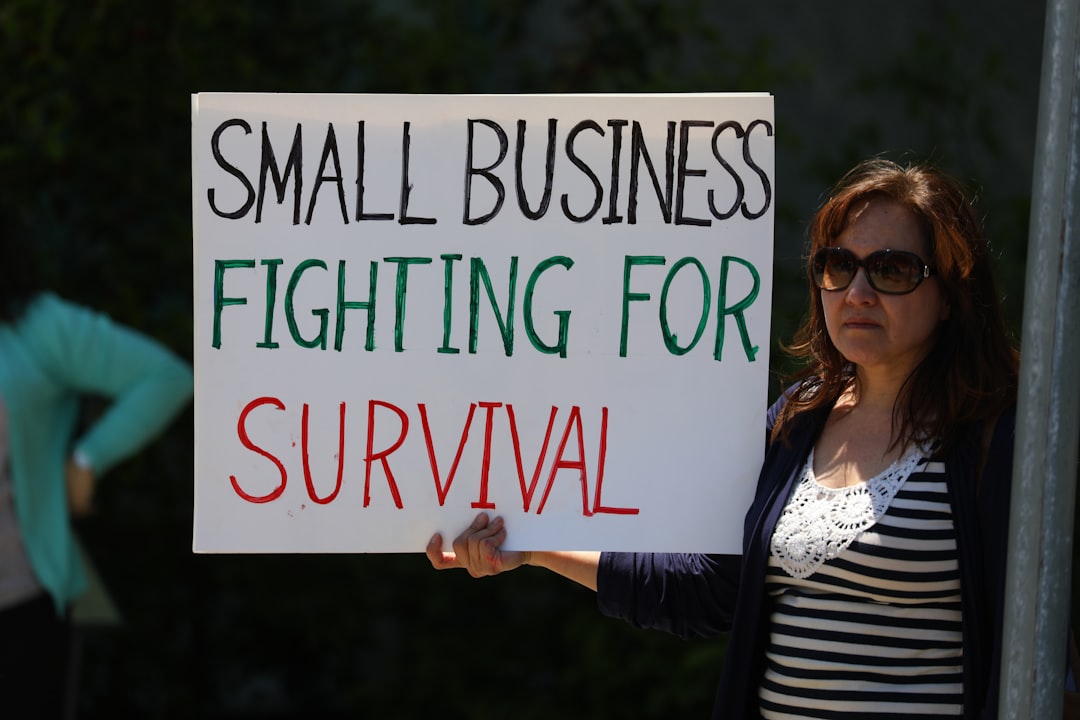
If you’ve searched “PR strategies for small businesses” before, you’ve probably found the same recycled list: write a press release tools, email it to journalists, post on social media, repeat. What you haven’t found is an honest explanation of why most of that advice stopped working years ago — and what the small businesses actually earning consistent media coverage in 2024 are doing instead.
Here’s the reality: U.S. newsrooms lost more than 57% of their employees between 2008 and 2020, according to Pew Research Center. The journalists who survived those cuts now cover three times as many beats with a fraction of the staff. They don’t have time to sift through mass pitch emails or wade through five-page press releases. The entire playbook has changed — and most PR advice for small businesses hasn’t caught up.
This guide is written from the practitioner’s side. You’ll get the specific strategies that are working right now in a post-newsroom-cuts, AI-saturated media landscape — including which platforms to use, how to write pitches that get opened, and how to build a PR operation that actually compounds over time. No agency required. No budget required. Just a clear-eyed look at how modern media coverage actually works, and the free tools that help you execute it.
2024 PR Strategy Comparison: Your Best Options at a Glance
| PR Strategy | Best For | Cost | Difficulty |
|---|---|---|---|
| Direct Journalist Pitching | Any small business with a clear expert angle | Free | Medium — requires research and strong writing |
| Source Request Platforms (Qwoted, SourceBottle) | Businesses with specific expertise or data | Free–$149/mo | Low-Medium — respond fast, answer well |
| podcast equipment Guesting | Service businesses, consultants, founders | Free (time investment only) | Low — easiest entry point for beginners |
| Local TV / Media Pitching | Brick-and-mortar, community-focused businesses | Free | Low — significantly underutilized |
| Newsjacking | Any business in a newsworthy industry vertical | Free | Medium-High — requires speed and timing |
| Paid Wire Distribution (PRWeb, Business Wire) | SEO backlinks only — not editorial coverage | $99–$699/release | Low — but low return for media goals |
Why Most Small Business PR Advice Is Wrong in 2024
The standard PR playbook — write a press release, blast it to a media list, wait for coverage — was designed for a newsroom environment that no longer exists. When major outlets had dedicated industry reporters, editorial assistants, and wire intake teams, volume outreach had a chance. Today, that same approach lands in an inbox that a single overworked journalist monitors alongside three other beats, two deadlines, and a podcast they’re also expected to produce.
The Pew Research Center’s data on newsroom job losses isn’t just a statistic — it’s the single most important context for understanding why your PR strategy needs to change. Fewer journalists means fewer people reviewing pitches, which means your window of opportunity is narrower and your quality bar needs to be significantly higher. Sending fifty generic pitches produces worse results than sending five precisely targeted ones.
What actually drives coverage in 2024 is being easy to cover. Journalists are working under time pressure you can barely imagine. The businesses that earn consistent coverage are the ones that hand journalists a complete package: a clear story angle, quotable expertise, a professional bio, supporting assets, and a fast response time. They don’t make the journalist do the work — they do it for them.
One more honest framing before we get tactical: PR is a credibility asset, not a short-term sales driver. Your first piece of media coverage probably won’t spike your revenue. What it does is build the foundation that makes every subsequent pitch easier to land — and every subsequent customer easier to convert. The businesses that abandon PR after six weeks are the ones who misunderstood the game from the start.
Strategy #1: Build a Journalist-Ready Media Presence Before You Pitch Anything
This is the step most small businesses skip entirely, and it’s why so many otherwise decent pitches go unanswered. Before a journalist replies to your email, they Google you. That process takes less than sixty seconds, and it determines whether your pitch gets a response or gets deleted. If your website looks abandoned, your LinkedIn is a barren professional graveyard, and your bio reads like it was written in 2011, you’ve already lost — regardless of how good your pitch angle was.
Journalists look for three specific things when they vet a source:
- A clear expert identity: What do you know, how do you know it, and why should their readers care about your opinion? This needs to be immediately obvious from your LinkedIn headline and website homepage — not buried in an “About” page after three clicks.
- Social proof: Past media coverage, verifiable credentials, notable client outcomes, or any signal that someone credible has already validated your expertise. Even a single prior mention in a trade publication dramatically improves your response rate.
- Ready-to-use assets: A professional headshot, a third-person bio, and a media kit templates page. A journalist on deadline who has to ask for a photo and a bio will frequently just move on to the next source who already provided them.
Practically speaking, here’s what to update this week: Rewrite your LinkedIn headline from your job title (e.g., “Owner at Smith Consulting”) to your expert positioning (e.g., “Supply Chain Strategist for Mid-Market Retailers | Quoted in Forbes, Inc.”). Write a third-person professional bio of 75–100 words that reads like it belongs in a publication byline. Then build a simple media page on your website — even a single page with your bio, headshot, expertise areas, and any past coverage links.
Use the free Bio Generator and Media Kit Builder on Media House Solutions to create these assets in minutes. These are the documents journalists expect and the tools that let you build them without a copywriter or designer. If you want to go deeper on the communication strategy behind professional positioning, a solid media kit template resource can also help you frame your expertise compellingly.
Think of it this way: a journalist on deadline who receives two equally interesting pitches will always respond to the sender who looks most interview-ready. Your media presence is a silent salesperson working for you before you ever send a single email.
Strategy #2: Master the Pitch Email — Not the Press Release
Here is the single most important insight in this entire guide: the press release is supporting documentation. The pitch email is the actual product you’re selling. Most small businesses spend 80% of their effort drafting a formal press release and then dash off a three-sentence email to attach it to. This is exactly backwards.
According to the Cision State of the Media Report, 71% of journalists prefer to be pitched via email, and critically, 68% say pitches under 200 words get the best response rates. They’re not asking for your 800-word press release in the body of the email. They want a tight, compelling reason to care — and then they’ll ask for more if they’re interested.
The anatomy of a pitch email that works in 2024:
- Subject line under 8 words, leading with the story angle — not your company name. “Why Small Retailers Are Winning Against Amazon This Holiday” is a story. “XYZ Company Announces New Product Line” is a press release.
- An opening sentence that answers “why does this matter right now?” Tie your pitch to something current: a trend, a recent news event, a data point, a seasonal hook.
- A single clear story hook in 2–3 sentences. What is the conflict, insight, or surprise? Why would the journalist’s readers find this genuinely interesting?
- A specific offer: an interview, exclusive data, a first-person account, or a contrarian perspective on a trending topic.
- A link to your media kit and bio. No attachments — they trigger spam filters and journalists actively dislike them.
Common pitch killers: pitching the wrong beat reporter (read at least three of their recent articles before you pitch — it’s obvious when you haven’t), pitching a story that was already covered by the same outlet in the last 60 days, using generic openings like “I hope this email finds you well,” and making the story about your company’s accomplishments instead of a problem your audience actually cares about.
On timing: PR software data consistently shows that Tuesday through Thursday mornings between 6–9am in the journalist’s local time zone outperforms every other send window. Journalists check email before the editorial meeting, not after.
The Media Pitch Writer tool generates a structured, journalist-tested pitch template tailored to your business. If you want to sharpen your writing instincts more broadly, investing in solid copywriting resources will pay dividends across every piece of outreach you write.
Strategy #3: Use Source Request Platforms — But Use the Right Ones
HARO (Help a Reporter Out), now rebranded as Connectively under Cision’s ownership, was the go-to platform for small business owners trying to earn media coverage for over a decade. It was genuinely effective. It is significantly less effective now. Journalists using the platform routinely report receiving 300–500 responses to a single query, which means your carefully written response is competing with hundreds of others — and the odds are not in your favor if you’re a smaller, less recognized name.
Smarter alternatives for small business media coverage tips in 2024:
- Qwoted: Journalists actively search for sources on this platform, meaning your profile can attract inbound queries rather than requiring you to respond to every blast email. Higher quality matches, less noise.
- SourceBottle: Free, underutilized (which means less competition), and particularly strong for lifestyle, business, and entrepreneurship press. A hidden gem for small businesses specifically.
- ProfNet: Premium pricing ($200+/month) but connects you to higher-tier publications like major national newspapers and trade journals. Worth considering once you have a few placements under your belt.
Regardless of which platform you use, the formula for effective source responses is the same: answer the specific question asked in your very first sentence (not your credentials — those come later), keep your response under 200 words, establish your credibility in exactly one sentence, and include a link to your media kit. Journalists skim — get to the point immediately.
The “quick response wins” principle applies on every platform. The first three to five responses a journalist reads have a disproportionately high selection rate. Set up mobile alerts and treat query responses as same-hour tasks, not something you’ll get to this afternoon. A consistent, disciplined responder on these platforms can realistically expect one to three placements per month — and those placements compound as journalists return to proven sources they’ve worked with before.
Strategy #4: Target Local Media and Podcast Guesting Before National Outlets
One of the most underutilized small business PR strategies that consistently works is also one of the most obvious: start local. Local ABC, NBC, and CBS affiliate morning shows are actively looking for local business stories — their content coordinators have airtime to fill, and a compelling local angle from a real business owner is exactly the kind of story they want. The barrier to entry is dramatically lower than national outlets, and the pitch process is often as simple as emailing the show’s segment producer with a clear, locally relevant hook.
The strategic reason to go local first isn’t just the easier entry point. It’s the clip library you build. When you eventually pitch a regional or national editor, one of the first questions they’ll ask is where you’ve been covered before. Local coverage answers that question definitively and de-risks you as an interview subject. You’re not an unknown quantity — you’re a proven source who’s already been on television.
Podcast guesting is equally undervalued, and for most small businesses in 2024, it has a higher ROI per hour than almost any other PR tactic. A single podcast appearance generates a permanent backlink to your website, a shareable content asset, often a transcript you can repurpose, and access to an engaged niche audience who has opted in to listen to a conversation for an hour. Compare that to a press release that earns a two-sentence mention, and the value math becomes obvious.
The sweet spot for podcast outreach is shows with 500–5,000 downloads per episode. Counterintuitively, these outperform larger shows for actual business outcomes — the audiences are tighter, more engaged, and far more likely to take action. Shows in this range are also actively booking guests (unlike mega-podcasts that receive celebrity pitches) and respond well to a professional, story-forward pitch. If you plan to appear on multiple shows, investing in quality podcast equipment for your recording setup signals professionalism to hosts and improves audio quality for listeners. Podcast advertising revenue in the U.S. surpassed $1.9 billion in 2023 — a number that reflects just how much audience attention has shifted to this medium and why guesting reaches genuinely valuable demographics.
Use the free Podcast Pitch Writer tool to craft a guest pitch that frames your expertise as a story rather than a sales pitch — that’s the difference between getting booked and getting ignored. For a deeper understanding of how to leverage podcast appearances as a podcast marketing strategy, there are excellent guides that map the full guest-to-lead pipeline.
Strategy #5: Newsjacking — How to Ride Trending Stories to Media Coverage
Newsjacking is the practice of inserting your expert commentary into a breaking or trending story, and it’s one of the highest-ROI tactics in this entire guide. Here’s why: when a major story breaks, journalists are actively scrambling for credible expert voices to add context and perspective. They’re not waiting for pitches to arrive over the next two weeks — they need sources today, often within hours. A well-timed newsjacking pitch from a credible expert can earn coverage in outlets that would otherwise take months of relationship-building to penetrate.
The timing window is unforgiving. The optimal newsjacking window is two to six hours after a story breaks. Too early, and journalists haven’t fully settled on their angle yet and won’t know what expert voice they need. Too late — typically after 12–24 hours — and the story is already in print with sources already selected. This is a strategy that rewards the small business owner who has set up their monitoring infrastructure in advance.
Set up Google Alerts for your three to five most relevant industry keywords combined with the word “news.” Follow the beat journalists who cover your industry on Twitter/X, where breaking story discussions happen fastest. Use Google Trends to spot momentum spikes before they peak — if a topic is trending upward on a Tuesday morning, a pitch sent by noon can still catch the story before it saturates.
The formula for a newsjacking pitch: Open with the name of the news event. Immediately state your specific connection, counter-angle, or unique insight. Offer something the initial coverage missed — journalists love “the angle the mainstream story got wrong.” Keep it to four sentences maximum. Here’s a concrete structure: “[Major news event] has most commentators saying X — but as someone who [specific credential or hands-on experience], I’m seeing Y happening on the ground, which your readers should know before they act on the mainstream take. Available for comment today.” Short, specific, time-sensitive, and offering genuine added value.
Strategy #6: Turn One Piece of Coverage Into a PR Flywheel
Most small businesses earn their first media placement, post it on social media once, and let it sit. This is the single biggest missed opportunity in DIY PR. One legitimate placement, properly leveraged, can realistically generate three to five additional placements — if you know the amplification sequence.
Here’s the exact sequence to follow after any coverage lands:
- Add it to your media kit immediately. Update your “As Seen In” section the same day. This is the asset that transforms every future pitch.
- Share it with a journalist-facing comment. A brief, non-pushy note to a journalist you’ve been meaning to approach: “Just covered by [Outlet] on [topic] — happy to offer the same perspective for your audience if it’s relevant to what you cover.” Simple. Non-aggressive. Effective.
- Add an “As Seen In” badge to your website homepage. Social proof at the point of first impression converts both journalists and customers.
- Create social content quoting the article. Pull a strong quote, format it as a graphic, and share it with a link. This creates additional impressions and signals credibility to anyone who finds you organically.
- Include the coverage link in future pitch emails. One line: “I was recently covered by [Outlet] on this topic — [link].” This single sentence dramatically increases your reply rate from new journalists because social proof is one of the strongest decision-making shortcuts humans use.
According to a Nielsen PR study cited across multiple industry reports, businesses that earned three or more media placements in a six-month period reported 2x higher website referral traffic compared to those with no coverage. The compounding effect is real: each placement builds domain authority through backlinks, establishes journalist familiarity with your name, and makes the next pitch incrementally easier to land. The hard part is the first one. After that, momentum builds measurably.
Use the free Media Kit Builder to format your growing coverage history into a professional, shareable document. You can also explore media relations guides that walk through the full lifecycle of building journalist relationships over time.
Building Your 2024 PR Calendar: What to Do Each Month
Inconsistency is the silent killer of small business PR efforts. The businesses that earn the most coverage aren’t necessarily the most interesting ones — they’re the most consistent ones. PR without a calendar becomes purely reactive, driven by whenever you happen to remember it exists. A rolling 90-day pitch calendar, tied to seasonal hooks, industry events, and business milestones, is the structural difference between a PR strategy and a PR accident.
Here’s a simple monthly framework to run on autopilot:
- Week 1: Identify two to three trending story angles from your industry. Read the trade publications, follow relevant journalists, check Google Trends. What conversations are happening that you have a unique perspective on?
- Week 2: Draft and send three to five targeted pitches. Use the story angles you identified. Each pitch should go to a different journalist or outlet — personalized, not mass-blasted.
- Week 3: Respond to source request platform queries daily. Set your Qwoted or SourceBottle alerts to deliver in the morning and respond before noon.
- Week 4: Follow up on unanswered pitches from Week 2 — once, and only once. A single polite follow-up (“Wanted to resurface this in case it got buried — happy to discuss”) is acceptable. Anything beyond that damages the relationship.
Seasonal PR hooks worth planning around: New Year business trend predictions (pitch in November for January coverage), tax season small business angles (pitch in January for March/April placement), back-to-school for any education or family-adjacent business, and Q4 gift guides — which require pitching in September because editors plan holiday content far in advance. Business milestones — anniversaries, hiring announcements, community initiatives — each represent a legitimate pitch hook that most small businesses never think to activate.
Use the free Press Release Generator to quickly draft announcement-style releases for milestones, then pair each one with a targeted pitch email for maximum impact. For businesses looking for press release templates and software to streamline the drafting process even further, there are solid options worth exploring.
Common PR Mistakes Small Businesses Make in 2024
Understanding what not to do is half the battle. These are the most common and most damaging mistakes small business owners make with their PR efforts — and they’re worth addressing directly because most PR advice simply doesn’t acknowledge them.
Mistake 1: Treating paid wire distribution as a real PR strategy. Services like PRWeb and Business Wire have a specific, limited utility: they generate SEO backlinks through syndicated pick-ups on news aggregator sites. They do not generate editorial coverage, journalist relationships, or meaningful media attention. Spending $300 on a wire release and calling it a PR campaign is how businesses convince themselves they’ve “tried PR” without actually engaging with how media coverage works.
Mistake 2: Pitching the same story to every outlet at the same time. Journalists talk to each other and compare inboxes more than most business owners realize. Offering an exclusive or a first-right-of-refusal to one outlet significantly increases your reply rate — and if they pass, you can move to the next outlet freely. Mass simultaneous pitching signals to every journalist that the story isn’t truly special.
Mistake 3: Making the pitch about your company instead of your audience’s problem. “We are excited to announce…” is the opening of a press release, not a pitch email. Editors think in headlines for their readers. Every pitch should be framed around a question their audience is asking or a problem their audience is experiencing — your company is the vehicle for answering it, not the point of the story.
Mistake 4: Giving up after two or three pitches. Most media relationships and placements take seven to ten touchpoints across different story angles before they convert. A journalist who doesn’t reply to your pitch in May might love your pitch in September when it connects to a story they’re working on. Consistency over months — not mass volume in a single week — is the actual strategy. A good PR and media relations book will reinforce this long-game mindset with concrete frameworks for sustaining outreach.
Mistake 5: Ignoring LinkedIn as a credibility signal. Journalists report routinely checking a source’s LinkedIn profile before replying to a pitch. A profile with 50 connections, no activity, and a vague headline signals that you may not be the established expert you’re positioning yourself as. Your LinkedIn is part of your pitch. Treat it accordingly.
Frequently Asked Questions
How long does it take for small business PR efforts to generate real media coverage?
The honest answer is three to six months for consistent, compounding results — though you can land your first placement faster if your pitch angle is timely and your media presence is already credible. The first month should be spent building your foundation: updating your LinkedIn, creating a bio and media kit, and identifying the right journalists to pitch. Months two and three are for active outreach and source platform responses. By month four, you typically start seeing replies and interest converting into placements. Businesses that expect results within 30 days and abandon the strategy are the ones who never experience the compounding effect that makes PR genuinely valuable.
Do press releases still work for small businesses in 2024, or are they outdated?
Press releases are not outdated — but their role has fundamentally changed. In 2024, a press release is supporting documentation, not the primary vehicle for earning coverage. It should live on your website (for SEO and journalist verification), be linked in your pitch email (not attached), and be available if a journalist requests more detail after expressing interest. The days of emailing a press release to a list and waiting for coverage are effectively over. What works is a compelling pitch email first, with the press release as backup collateral. That said, having a professionally formatted press release software solution can help you produce clean, credible releases efficiently.
How do I find a journalist’s email address to send a pitch without buying an expensive media database?
Several approaches work well without a paid database. First, check the journalist’s author page on the publication — many outlets list contact emails or link to a journalist’s professional site where contact details appear. Second, use Hunter.io (free tier available) to find verified professional email addresses by domain. Third, the standard format for most large publications is [email protected] or [email protected] — testing both takes thirty seconds. Finally, Twitter/X and LinkedIn are underused direct outreach channels — many journalists prefer a DM to a cold email, particularly if you’ve engaged thoughtfully with their work before pitching. Whichever method you use, always pitch the journalist who actually covers your beat, not a generic editorial inbox.
Can a small business do effective PR without hiring an agency or a PR professional?
Absolutely — and in many cases, the small business owner is a more compelling source than an agency spokesperson would be. Journalists want to talk to the person with firsthand knowledge and real skin in the game, not a PR intermediary. What a DIY approach requires is the same assets an agency would create on your behalf: a strong media presence, a professional media kit, well-crafted pitch emails, and consistent outreach over time. The tools to build all of this now exist for free — the free tool suite at Media House Solutions (Press Release Generator, Media Pitch Writer, Media Kit Builder, Podcast Pitch Writer, Bio Generator) covers every document and pitch asset you need to run a credible PR operation independently.
What’s the difference between a press release and a media pitch, and which should I send?
A press release is a formal, structured announcement document written in third person, following a specific journalistic format with a headline, dateline, body, and boilerplate. A media pitch is a short, personal email written directly to a specific journalist explaining why a story would be valuable for their audience. You send both — but in a specific sequence. The pitch email goes first and is the primary vehicle for earning a journalist’s interest. The press release is linked or attached only after a journalist has expressed interest, or it lives on your website as verification that your announcement is real. Journalists who receive a press release without a compelling pitch reason to care almost always file it without reading.
How many times should I follow up with a journalist after sending a pitch?
Once, and only once. Send your initial pitch, wait five to seven business days, and then send a single brief follow-up — two or three sentences maximum — noting that you wanted to resurface the pitch in case it got buried and confirming you’re still available to discuss. If there’s no response after the follow-up, move on. Sending multiple follow-ups does not increase your chances — it decreases them by signaling desperation and potentially getting your email address flagged as persistent. The better strategy is to pitch a different angle to the same journalist two to three months later. Journalists have long memories for both good pitches and annoying follow-up sequences.
Ready to put these strategies into action? Start building your PR foundation with Media House Solutions’ free tools — generate a professional press release with the Press Release Generator, craft a pitch journalists will actually open with the Media Pitch Writer, or build your credibility file with the Media Kit Builder. All free. No agency required. The media coverage you’ve been trying to earn is closer than you think — you just need the right tools and the right strategy to get there.
Featured image: Photo by Gene Gallin on Unsplash