
Affordable PR Training for Small Business Owners: What’s Actually Worth Buying in 2025
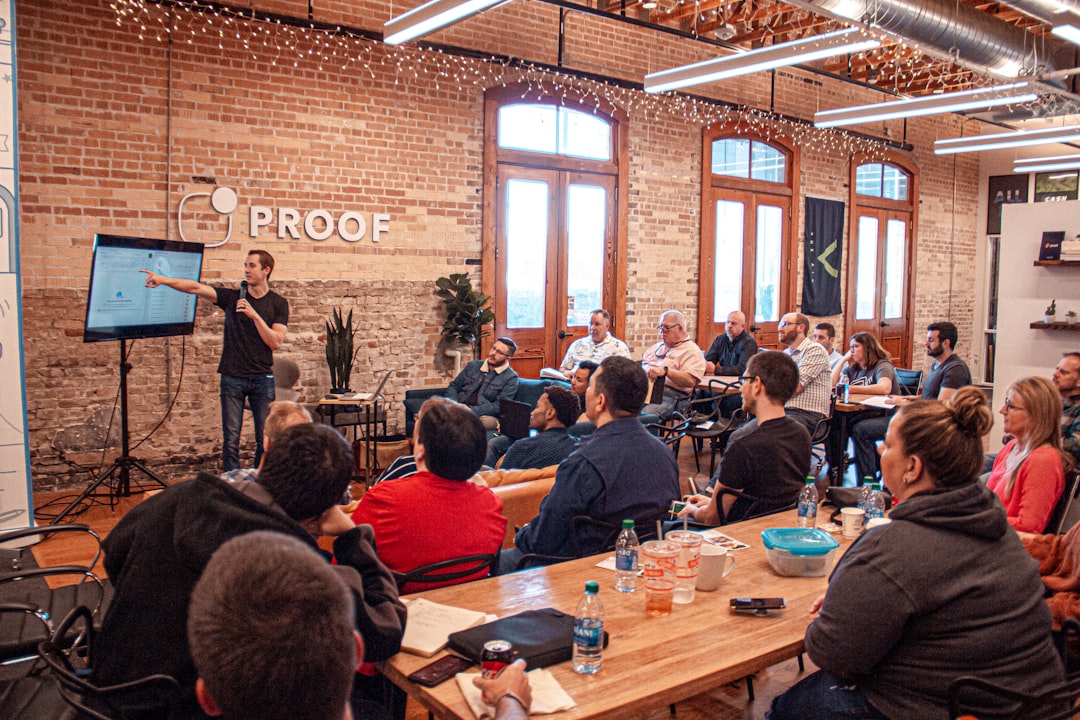
If you’ve searched “buy affordable PR training for small business” lately, you’ve probably landed on one of two things: a $997 masterclass pitched as a “limited-time deal” at $297, or a generic blog post listing ten Udemy courses with no real guidance on which one actually fits where you are right now. Neither is genuinely useful. The truth about PR training for small business owners is more nuanced — and more empowering — than most course sellers want you to know.
This guide takes a different approach. Instead of just listing cheap options, we’ll show you how to diagnose exactly which PR skill you’re missing, how to evaluate training quality beyond star ratings, and — critically — when a free tool can replace a paid course entirely, saving you both money and the 15 hours you’d spend watching video modules. By the end, you’ll know precisely what’s worth buying, what to skip, and how to start generating real PR strategy guide faster than any course alone can get you there.
Affordable PR Training for Small Businesses: Quick Comparison
Before we dive deep, here’s an at-a-glance comparison of the main PR training formats available to small business owners in 2025. We’ll expand on each of these throughout the article.
| Option | Best For | Price Range | Rating |
|---|---|---|---|
| Udemy PR Courses | Foundational press release writing guide business writing guides, media relations handbook basics | $15–$50 (on sale) | ⭐⭐⭐⭐ (best value for beginners) |
| LinkedIn Learning PR Path | Media relations, crisis comms, personal brand PR | Included with Premium (~$40/mo) | ⭐⭐⭐⭐ (great if you’re already a Premium subscriber) |
| Cohort-Based Programs (e.g., PR Couture, niche workshops) | Deeper skill building, community feedback, live Q&A | $150–$400 | ⭐⭐⭐⭐⭐ (highest ROI if you’ll engage actively) |
| PRSA Online Education | Credentialing, formal PR methodology | $200–$500+ | ⭐⭐⭐ (overkill for most small business owners) |
| YouTube + Free Blogs (Self-Directed) | Supplementary learning, pitch inspiration, marketing strategy refreshers | Free | ⭐⭐⭐ (high variance in quality; requires curation) |
| Free PR Tool Suites (e.g., Media House Solutions) | Immediate execution: press releases, pitches, media kits | Free | ⭐⭐⭐⭐⭐ (highest speed-to-result for most small businesses) |
Why Most Affordable PR Training Falls Short for Small Businesses
The uncomfortable reality is that most PR courses — even the ones marketed specifically to entrepreneurs — were not built for the person running a business alone or with a two-person team. They were built for PR professionals, communications graduates, or corporate marketing staff who have time, a team, and institutional resources. The content gets repackaged with a lower price tag and a new thumbnail, but the underlying curriculum still assumes you have a dedicated pitch calendar, an intern to build media lists, and a week to draft a single press release.
This creates a fundamental mismatch. When a solo founder buys a comprehensive PR course, they’re learning frameworks that require infrastructure they don’t have. Module 3 tells you to “develop your editorial calendar and align press releases with campaign milestones.” Great advice — if you have campaigns. For someone launching their first product or trying to get their first press mention, that kind of guidance is paralysing rather than empowering.
There’s also what experienced practitioners call the “information vs. implementation” trap. You finish a course, you feel ready, and then you sit down to write an actual pitch and realise the course gave you principles but no templates. No example of a subject line that got a journalist’s attention. No swipe file of press release formats that editors in your specific industry actually open. Feeling prepared is not the same as being equipped. One produces confidence; the other produces coverage.
How do you spot a course built for small business owners versus one repurposed from agency training? Watch for these red flags: jargon-heavy module titles (“strategic narrative architecture,” “stakeholder engagement mapping”), no mention of bootstrapped media outreach or solo pitching, no template deliverables included, and instructors who reference “your PR team” throughout. If the course assumes you’ll delegate anything, it’s not built for you.
Finally, consider the real cost of PR training. A 10-hour course priced at $99 sounds affordable. But if your time is worth $50 per hour — a conservative estimate for most business owners — that course actually costs you $599 when you count your time investment. That’s not an argument against training; it’s an argument for being ruthlessly selective about which training you pursue and whether you actually need it before you have the execution tools in place.
The 4 Types of PR Skills Small Businesses Actually Need
Not every small business owner has the same PR gap. Treating all PR training as interchangeable is one of the most expensive mistakes you can make — both in money spent and time wasted. Here are the four specific skill types that drive real media results for small businesses, and how to figure out which one you actually need right now.
Skill Type 1: Writing a Press Release That Doesn’t Get Deleted
A functional press release isn’t just grammatically correct — it’s structured to answer the journalist’s first question (“why does this matter to my readers?”) in the first two sentences. Most small business press releases bury the news hook in paragraph three and open with a self-congratulatory company description. Training in this skill is valuable, but so are press release writing guides that walk you through real examples. Small businesses that regularly issue press releases generate 2x more website referral traffic than those that don’t, according to Cision’s small business communications survey — meaning this skill has a direct traffic ROI, not just a reputation one.
Skill Type 2: Media Pitching
This is where most small business PR falls apart. According to the Muck Rack State of Journalism report, 82% of journalists say they prefer email pitches, and the subject line is the single most important factor in whether they open it at all. Media pitching is a distinct skill from press release writing — it’s shorter, more conversational, hyper-personalised to a specific journalist’s beat, and built around a hook rather than a news announcement. Training that teaches you media pitching well will show you how to research a journalist’s recent work, mirror their tone, and write a subject line that functions more like a compelling headline than a business email opener. This is worth investing in separately if it’s your bottleneck.
Skill Type 3: Building Credibility Assets
This is the most overlooked skill category in PR training, and it’s the one that silently kills the most outreach campaigns. When a journalist receives your pitch and finds it interesting, the next thing they do is Google your name and your business. What they find — or don’t find — determines whether they respond. A professional professional bio writing, a clean media kit templates with high-resolution photos, and a page of social proof (past coverage, client results, credentials) are not nice-to-haves. They are prerequisites for anyone expecting a response rate above 5%. Most affordable PR courses skip this entirely or relegate it to a 10-minute video module. You can find media kit templates as a starting point, but having a structured builder makes this faster.
Skill Type 4: podcast equipment and Alternative Media Pitching
Podcast appearances have grown 63% as a PR channel for small and medium-sized businesses since 2021, yet fewer than 15% of affordable small business PR courses include podcast pitching as a dedicated module. This is a significant gap — and a significant opportunity. Podcast pitching is less competitive than traditional press outreach, acceptance rates are higher, and a single strong podcast appearance can drive more engaged traffic than a mention in a regional newspaper. If you’re a service-based business, a consultant, a coach, or a founder with a compelling story, this is likely your highest-ROI PR channel right now. If you plan to appear on podcasts regularly, it’s worth investing in a quality USB podcast microphone to sound professional from day one.
Self-Assessment: Which Skill Gap Is Costing You the Most?
- Have you sent more than 5 pitches in the past 90 days? (If no, outreach volume is your bottleneck — not skill.)
- Does your business have a current, professional media kit with a bio and high-res images? (If no, credibility assets are your gap.)
- What’s your email pitch open rate? (Under 20% = subject line / targeting problem = pitching skill gap.)
- Are your press releases structured with the news hook in the first sentence? (If you’re unsure, press release writing is your gap.)
- Have you pitched any podcasts in the past six months? (If no, you’re leaving the fastest-growing PR channel completely untapped.)
What to Look For When Buying Affordable PR Training
Once you’ve identified your skill gap, the next challenge is evaluating which training will actually close it. Most people default to star ratings and price — neither of which tells you much. Here are the criteria that actually matter.
Deliverable Density
The single most important differentiator between PR training that produces results and training that produces confidence is what you walk away holding. Does the course give you actual templates — pitch swipe files, press release formats, media list spreadsheet frameworks, subject line formulas — or does it give you video modules explaining concepts? Templates have compounding value. You use them once, improve them, and they keep working. Video knowledge fades within two weeks of watching, especially if you haven’t applied it. When evaluating any course, specifically look for a “resources” or “downloads” section before purchasing. If there isn’t one, that’s a yellow flag.
Instructor Credibility Signals
Look for instructors who have placed stories in real outlets within the last 24 months, not former agency executives teaching from a 2015 playbook. The media landscape post-2020 is genuinely different — newsrooms are smaller, journalists cover more beats, and the pitch volume they receive has increased dramatically. An instructor whose case studies reference placements in 2023 and 2024 publications is teaching from current reality. One whose bio mentions “15 years in corporate communications” but whose last real placement was pre-pandemic may be teaching a game that no longer exists in the same form. Also look for instructors who specialise in small business PR, not just “PR” generally — the public relations books and training built for solo founders and bootstrapped brands address a fundamentally different reality than agency-facing education.
Community Access and Live Q&A
PR is one of the few skills where a peer review before you act can literally save you from a permanent mistake. Burning a journalist contact with a tone-deaf pitch is not recoverable — they will remember your name for the wrong reasons. A course with a community component or live Q&A allows you to sanity-check pitches before sending them, ask whether your press release angle is newsworthy, and learn from other small business owners who are in the same stage you are. For this reason, a $200 cohort-based program with live Q&A will often produce better results than a $49 self-paced course with no community — even if the content is otherwise comparable.
Price Benchmarks That Actually Make Sense in 2025
Here’s the honest breakdown of what “affordable” means in today’s market: Under $100 should be a targeted, skill-specific workshop or course — not a comprehensive PR education. $100–$300 is the sweet spot for a comprehensive small business PR program that covers multiple skills with template deliverables and some community access. $300+ starts competing directly with hiring a freelance PR consultant for a single project. The average PR agency retainer for small business clients ranges from $2,500–$10,000 per month — so any quality training in the $50–$300 range is, objectively, an extraordinary value when you consider what professional PR support costs. The key is ensuring the training is actually matched to your stage and skill gap before you buy.
Best Affordable PR Training Options for Small Businesses in 2025
With the right evaluation criteria in mind, here’s how the actual landscape breaks down for small business owners seeking to learn public relations books on a budget.
Udemy: High Volume, Variable Quality, Exceptional Value When You Know What to Look For
Udemy is the default starting point for most self-taught small business PR, and with good reason. When you filter correctly, you’ll find courses that cover media relations, press release writing, and basic pitching at prices between $15 and $50 during their regular sales. The filtering criteria that matter: look for courses with 4.4 stars or higher, a minimum of 500 reviews, and an update date within the past 18 months. A course updated in 2021 is already operating in a different media environment than the one that exists today. The best Udemy PR courses for small business owners focus on practical press release structure and basic media relations — they’re appropriate for someone building foundational knowledge but are generally too introductory to sharpen advanced pitching skills.
LinkedIn Learning: Underutilised and Already Paid For
LinkedIn Learning’s PR and communications path is one of the most consistently underutilised resources for small business owners, primarily because people forget it’s included with their LinkedIn Premium subscription. If you’re already paying ~$40/month for Premium, you have access to courses covering media relations, personal brand PR, crisis communications basics, and communications strategy. The quality is more consistent than Udemy because instructors are vetted — though the content tends to skew toward corporate communications rather than bootstrapped small business PR. Still, for foundational media relations skills, it’s exceptional value when the subscription is already in your budget for other reasons.
PR Couture and Niche Small Business PR Programs
For fashion, lifestyle, and consumer product businesses, PR Couture offers some of the most relevant targeted training available at the $150–$400 price point. For other niches, look for industry-specific PR workshops offered by trade associations, marketing communities, or former journalists turned consultants. These programs justify their higher price through specificity — a media pitching workshop built specifically for food and beverage brands will include the exact outlets, journalists, and seasonal hooks relevant to that sector, which is worth far more than a generic pitching module. Pair the right marketing strategy books with structured workshops and you’ll build a genuinely rounded PR foundation.
YouTube as a Self-Directed Learning Path
There is genuinely excellent free PR education on YouTube, but the signal-to-noise ratio requires curation. Look for educators who regularly show real examples — actual pitch emails, actual press releases, actual coverage results — rather than talking through theory. Before you spend a single dollar on paid training, a well-curated 10-hour YouTube learning path covering press release writing, media pitching basics, and journalist research techniques can tell you a great deal about your learning style and where your actual gaps are. Use free content to identify what you don’t know, then invest in paid training to close the specific gap efficiently.
A Note on PR and publicity books as Supplementary Training
Don’t overlook PR and publicity books as a lower-cost complement to video courses. A well-chosen PR book often provides deeper strategic context than a video course at a fraction of the price, and the best ones include real case studies and pitch examples that you can model directly. Combine a $15–$25 book with a targeted Udemy course and free tools, and you have a complete learning stack for under $75.
What PR Training Can’t Teach You (And What You Need Instead)
Here’s the insight that most course sellers would prefer you not reach before buying: training gives you knowledge, but tools give you execution. For PR specifically — a discipline where the gap between knowing what to do and actually doing it is massive — this distinction is everything.
Consider the press release problem. You could invest $200 in a course on writing press releases, spend 12 hours watching modules, and still sit down to write your first one and freeze. Or you could use a structured Press Release Generator that embeds best practices directly into the format — walking you through the news angle, the boilerplate, the quote structure, and the contact information in a guided way that makes best practice automatic. For most small business owners, the tool produces a better first press release than the course does, and it does it in 20 minutes instead of a week.
The same principle applies to media pitching. The difference between someone who studied pitching theory for four weeks and someone who used a well-structured pitch template with the right hook framework is often indistinguishable to a journalist. What the journalist sees is the output — not the education behind it. If the output is strong, you get a response.
This is precisely why Media House Solutions offers a free tool suite designed to serve as the execution layer for your PR efforts — whether you’ve taken a course or not. The Press Release Generator, Media Pitch Writer, and Media Kit Builder give you functional, journalist-ready outputs immediately, without requiring you to first master the underlying craft. Use them to start generating coverage now, and use whatever training you invest in to sharpen and personalise your approach over time.
There’s one more critical gap that most PR training ignores entirely: the media kit. Research consistently shows that journalists Google a business within minutes of opening an interesting pitch. An 80% coverage opportunity is lost at this stage because the business has no media kit, a vague website, or an unprofessional online presence. No amount of pitching skill compensates for a journalist landing on a website with no press page, no professional professional headshot lighting (a proper professional headshot lighting setup makes a real difference here), and no clear explanation of who you are. Build the credibility infrastructure first. Then pitch.
How to Build a PR Skill Stack on a Small Business Budget
The most expensive PR mistake isn’t buying the wrong course — it’s buying a comprehensive course before you’ve identified your actual bottleneck. A $300 PR masterclass covering 12 modules won’t help you if your only real problem is that your press releases have a weak news hook. Fix the specific thing that’s broken first. Then expand.
The Sequenced Approach
Start by completing the five-question self-assessment above. Identify your single most critical bottleneck — writing, pitching, or credibility assets — and solve that one problem before moving to the next. This isn’t just a budget strategy; it’s a psychology strategy. Solving a specific, tangible problem builds confidence and momentum. Buying a comprehensive course and working through 12 modules before seeing any results leads to the most common PR training outcome: a completed course and zero pitches sent.
Budget Allocation Framework
If you have $100 total to invest in PR education this quarter, here’s how to allocate it strategically: $0 on tools — use the free Media House Solutions suite for press releases, pitches, and media kit building. $50 on a targeted skill-specific course — a single well-chosen Udemy course or focused YouTube learning path covering your identified skill gap. $50 held for a one-month trial of a media list subscription service like Muck Rack’s free tier, Cision’s entry-level option, or a niche journalist database relevant to your industry. Without a current, targeted media list, even the best pitch goes nowhere.
Measuring ROI on PR Training
One reason small business owners feel like “PR doesn’t work” is that they never set up a way to measure what’s changing. Before you invest in any training, establish a baseline: How many pitches do you send per week? What’s your current journalist response rate? How many press release pickups have you received in the past 90 days? After completing your training and applying it for 60 days, measure the same metrics. Concrete numbers — not feelings — tell you whether the investment is producing results. If your response rate went from 3% to 11% after a media pitching course, that training paid for itself. If nothing changed, you need to assess whether the training was the problem or whether execution and targeting were the actual gaps. A solid media relations handbook can help you understand the benchmarks you should be measuring against.
The 90-Day PR Training Plan
Days 1–14: Build your credibility infrastructure using free tools. Create your media kit using the Media House Solutions Media Kit Builder, write your professional bio with the Bio Generator, and ensure your press page and website are journalist-ready. No outreach yet. Days 15–30: Complete your targeted skill training — one Udemy course, one focused YouTube learning path, or one workshop. Apply what you learn immediately using the free tools. Draft your first press release and your first pitch. Days 31–60: Begin active outreach. Send 3–5 pitches per week. Track responses. Adjust your approach based on what’s getting opens versus what’s getting ignored. Days 61–90: Assess your results data. Identify your next skill gap. Consider whether a more advanced or community-based training investment is now warranted based on where your actual bottleneck sits.
This sequence breaks the paralysis of “I’m still learning” that keeps most small business owners from ever sending their first pitch. The goal is media coverage, not PR mastery. You can pursue mastery in parallel with actual outreach — and you’ll learn faster from the real-world feedback anyway.
Frequently Asked Questions
Is it worth paying for PR training if I can find free PR advice on YouTube and blogs?
The honest answer is: it depends on whether you can self-direct effectively through free content. Free YouTube and blog content can absolutely teach you the fundamentals of press release writing, media pitching, and journalist research — if you’re willing to curate it carefully and build your own learning path. The advantage of paid training is structure, accountability, and deliverables. A well-chosen $49 Udemy course will give you a logical sequence, downloadable templates, and a completion certificate that signals you’ve actually covered the material systematically. The risk with free content is spending 20 hours across 50 different sources and still not having a clear framework or a single usable template. Use free content to determine your gaps and test your learning style. If you find yourself watching YouTube videos without ever implementing anything, a structured paid course with templates may be what actually gets you moving. Also remember: the most powerful “free training” is studying real pitch emails and press releases that actually generated coverage — not theoretical instruction. Find examples in PR communities, journalist-facing forums, and media relations groups on LinkedIn.
What’s the difference between a PR course and just using PR templates or tools?
A PR course teaches you the underlying principles — why a news hook works, what makes a subject line compelling, how journalists think about story selection. A PR tool or template gives you the output framework without requiring you to first understand every principle behind it. Both have genuine value, and they’re not mutually exclusive. For most small business owners at the beginning of their PR journey, tools produce faster results because they remove the blank-page problem. A press release generator that walks you through the structure, a pitch writer that prompts you for your news hook and journalist angle, and a media kit builder that ensures you don’t miss critical elements — these produce journalist-ready outputs immediately. As you use these tools repeatedly and start to understand why each section is structured the way it is, you’re actually building PR knowledge organically through practice. The Media House Solutions free tool suite — including the Press Release Generator, Media Pitch Writer, and Media Kit Builder — is specifically designed to work this way, embedding best practices into the process itself so you learn by doing.
How long does it take to see results from PR training as a small business owner?
This is one of the most common questions and one of the most misunderstood areas of PR in general. Training alone produces zero results — results come from applying training through actual outreach. Assuming you complete a course, build your credibility assets, and begin active pitching, you can realistically expect your first journalist responses within two to four weeks of starting outreach, assuming you’re targeting the right publications and personalising your pitches. Actual press placements typically take four to twelve weeks from first outreach to published story, depending on the outlet’s editorial cycle and the newsworthiness of your angle. Podcast appearances typically have a shorter timeline — many independent podcasters will book a compelling guest within two to four weeks of a good pitch. The most important variable is not how much training you’ve done, but how many quality pitches you’re sending consistently. Ten good pitches per week will produce results faster than ten hours of course watching.
Can I do my own PR without any formal training if I use the right tools?
Yes — and many small business owners do exactly this with genuine success. The key is having the right execution infrastructure in place: a well-structured press release format, a personalised pitch framework, a complete media kit, and a targeted media list of journalists who actually cover your industry and story type. If you have these elements and you’re sending consistent, newsworthy pitches, you can generate real media coverage without ever completing a formal PR course. Formal training accelerates your learning curve and helps you understand why certain approaches work — which matters more as your PR program becomes more sophisticated. But if your goal is simply to get your first five press placements, the combination of free tools and consistent effort will take you further than a course you complete but never act on. Start with the free tools at Media House Solutions — the Press Release Generator, Media Pitch Writer, and Media Kit Builder provide everything you need to send your first pitch this week. Layer in targeted training as you identify specific gaps that are limiting your results.
Ready to put what you’ve learned into action without spending a dollar? Try the free Media House Solutions tool suite — the Press Release Generator, Media Pitch Writer, and Media Kit Builder are the execution layer that makes any PR training you invest in actually produce results. Start building your media presence today.
Featured image: Photo by Matthew Osborn on Unsplash